
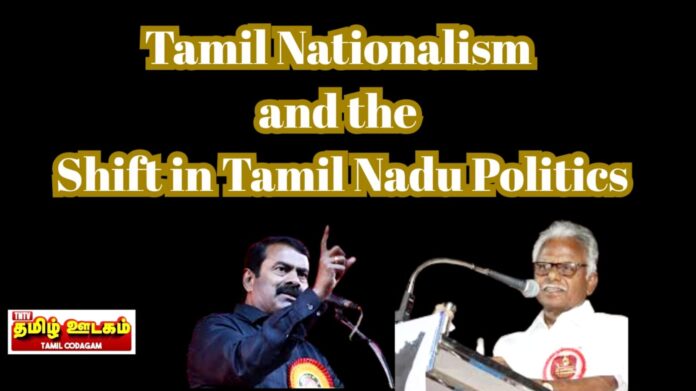
Tamil Nadu, home to a strong Tamil-speaking majority, has witnessed a significant shift in its political discourse over the past decade. Until the early 2010s, expressions of “Tamil identity” and “Tamil nationalism” were often dismissed or ridiculed in mainstream politics. Today, they have moved to the center of political conversation.
For decades, the idea of “Dravidian” identity dominated the state’s political landscape. Originally a linguistic term with broader South Indian connotations, it evolved into a powerful political ideology associated with social justice, rationalism, and anti-caste movements. These contributions remain historically significant.
However, critics argue that over time, contradictions emerged between ideological claims and political practice. Questions have been raised about representation, leadership patterns, and whether the framework adequately reflected the aspirations of Tamil-speaking people.
A key turning point came in 2009, during the final phase of the Sri Lankan civil war. The large-scale loss of Tamil civilian lives triggered widespread emotional and political responses in Tamil Nadu. For many, this moment led to a deeper re-evaluation of identity, political priorities, and the effectiveness of existing ideologies.
In the years that followed, Tamil nationalist discourse gained momentum. Political movements and public platforms began to emphasize linguistic identity, cultural continuity, and regional self-respect. Digital media, youth engagement, and public debates played a crucial role in spreading these ideas.
At the same time, it became increasingly evident that the term “Dravidian” did not carry the same political relevance in neighboring states like Andhra Pradesh, Karnataka, or Kerala. This raised further questions about its unique persistence in Tamil Nadu.
Today, Tamil identity has become an unavoidable element in the state’s politics. Across party lines, leaders are compelled to engage with the language, culture, and sentiments of the Tamil people more directly than ever before.
The rise of Tamil nationalism does not necessarily mark the end of earlier political traditions, but it does signal a transformation. It reflects an evolving political consciousness—one that seeks to redefine representation, identity, and the future direction of Tamil Nadu.
–valarmeyyarivaan @ Vishwaa Viswanaath, Editor : Tamil Oodagam Email : editor@[email protected]